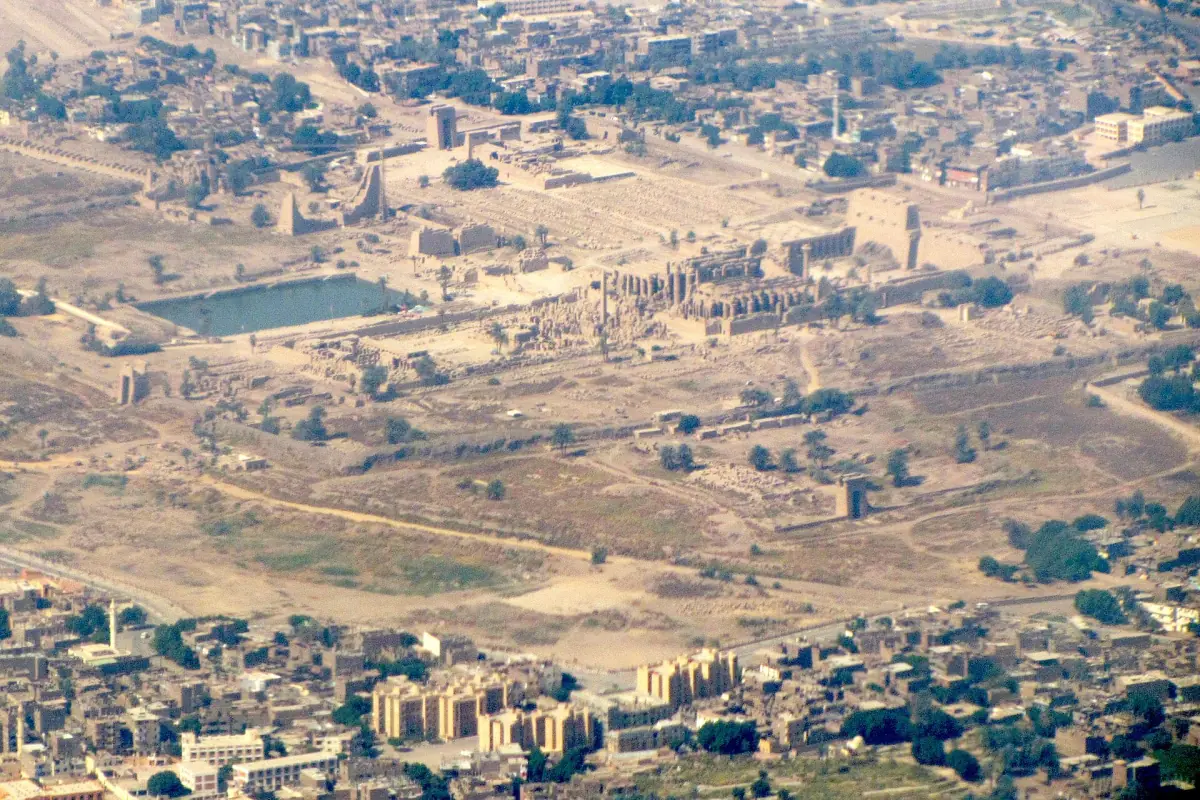
Karnak Temple facts at a glance
Karnak lies in Luxor on the east bank of the Nile and was built and extended over many centuries. The earliest traces date to the time of Intef II, and work continued into the Ptolemaic and Roman periods. The heart of the complex is the precinct of Amun. Mut lies to the south and Montu to the north.
Most famous numbers belong to single buildings, not to the whole site, and this page labels them that way. If you want to see these places yourself, start with the Karnak Temple tickets. The 2026 tariff for foreign adults is EGP 600.
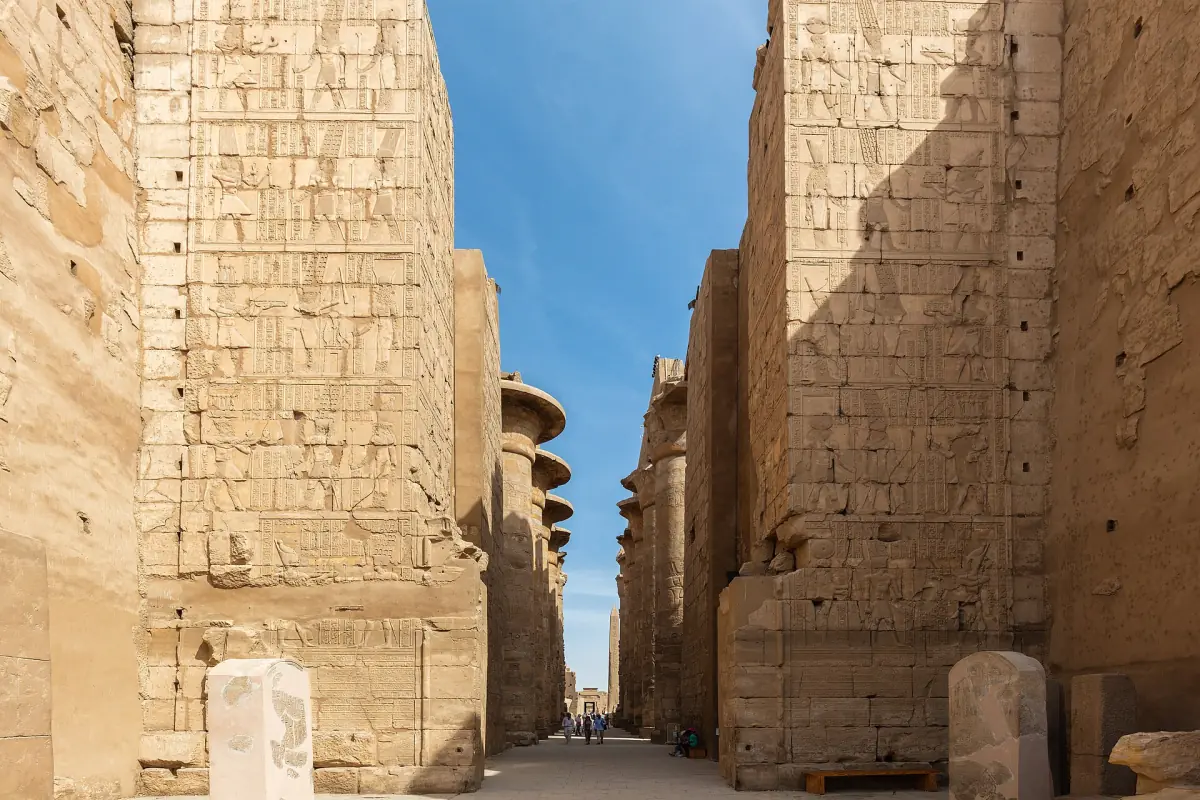
Our pick: Karnak and Luxor Temple with a guide
To see the numbers on this page in place, this half-day tour covers both temples with a guide and lunch; book it with the entry option.
Hand-picked tours, booked through GetYourGuide. Prices are indicative starting prices in US dollars (as of October 2026). Tap a tour for live availability and the current price in your currency.
Guided visits to Karnak Temple
Tours that explain the halls, obelisks and chapels on site, with live prices and availability.
Karnak Temple: key numbers
Figures for single monuments, with the object they refer to.
| Subject | Figure |
|---|---|
| Columns in the Great Hypostyle Hall | 134: 12 tall central columns and 122 smaller side columns |
| Size of the Great Hypostyle Hall | 102 m wide, 53 m deep, about 5,000 m² |
| Central columns | about 20 to 21 m high, diameter 3.4 m |
| Side columns | about 13 to 15 m high |
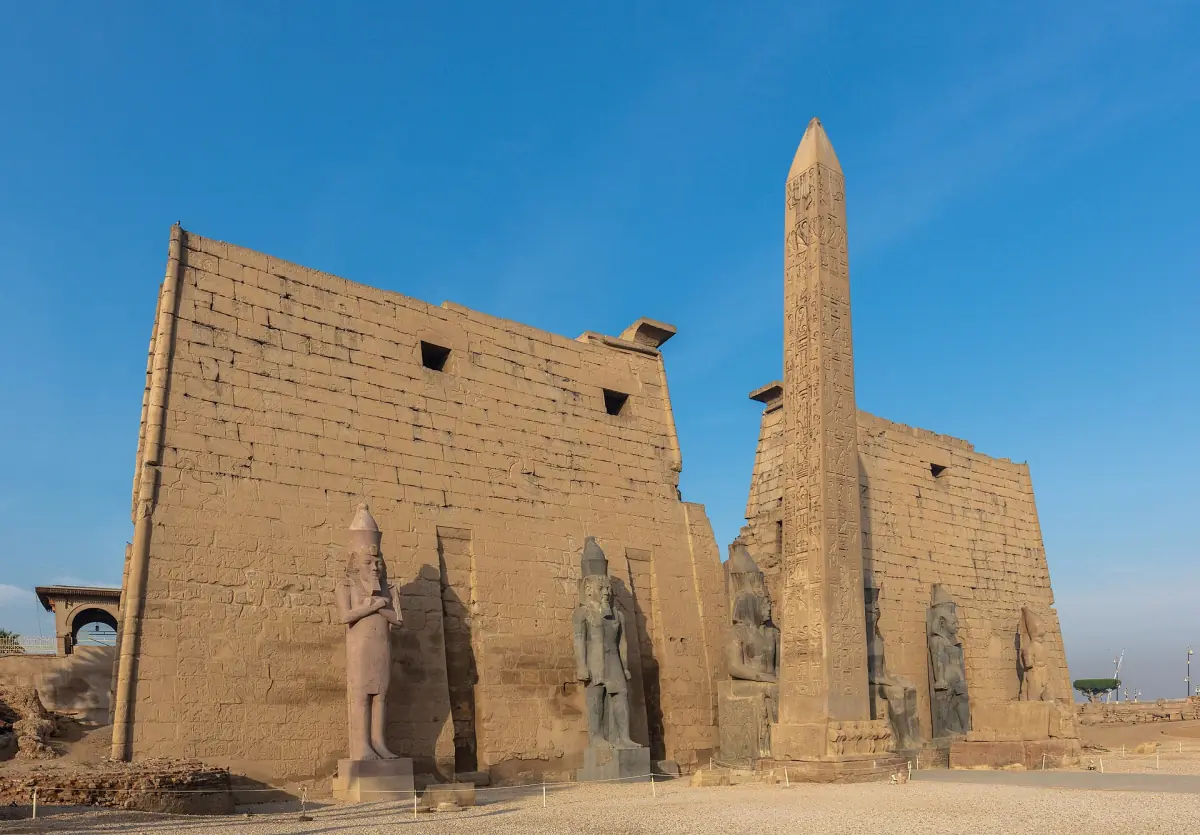
| Pylons of the Amun precinct | numbered I to X: six on the east-west axis, four on the north-south cross axis |
| Standing obelisk of Hatshepsut | almost 30 m, over 300 t |
| Standing obelisk of Thutmose I | 21.7 m, about 143 t, red granite from Aswan |
| Distance to Luxor Temple | about 3 km to the south |
Heights vary between measurements, so the columns are given as a range. The hall measures about 5,000 m² in rounded terms, while width times depth gives about 5,400 m². For the whole precinct there is no single agreed area, because it depends on where you draw its edge. The World Heritage property Ancient Thebes with its Necropolis, listed in 1979, covers 7,390.16 ha with a buffer zone of 443.55 ha. That area includes Karnak, Luxor Temple and the western necropolises, so it is not the size of Karnak.
Who built Karnak
No single builder: kings from different periods added to the site.
Thutmose III
He had the Akh-menu built. His calcite chapel has been rebuilt in the Open Air Museum.
History →Seti I and Ramses II
Seti I built most of the Great Hypostyle Hall. Ramses II completed it.
Hypostyle Hall →Great Hypostyle Hall: what makes it special
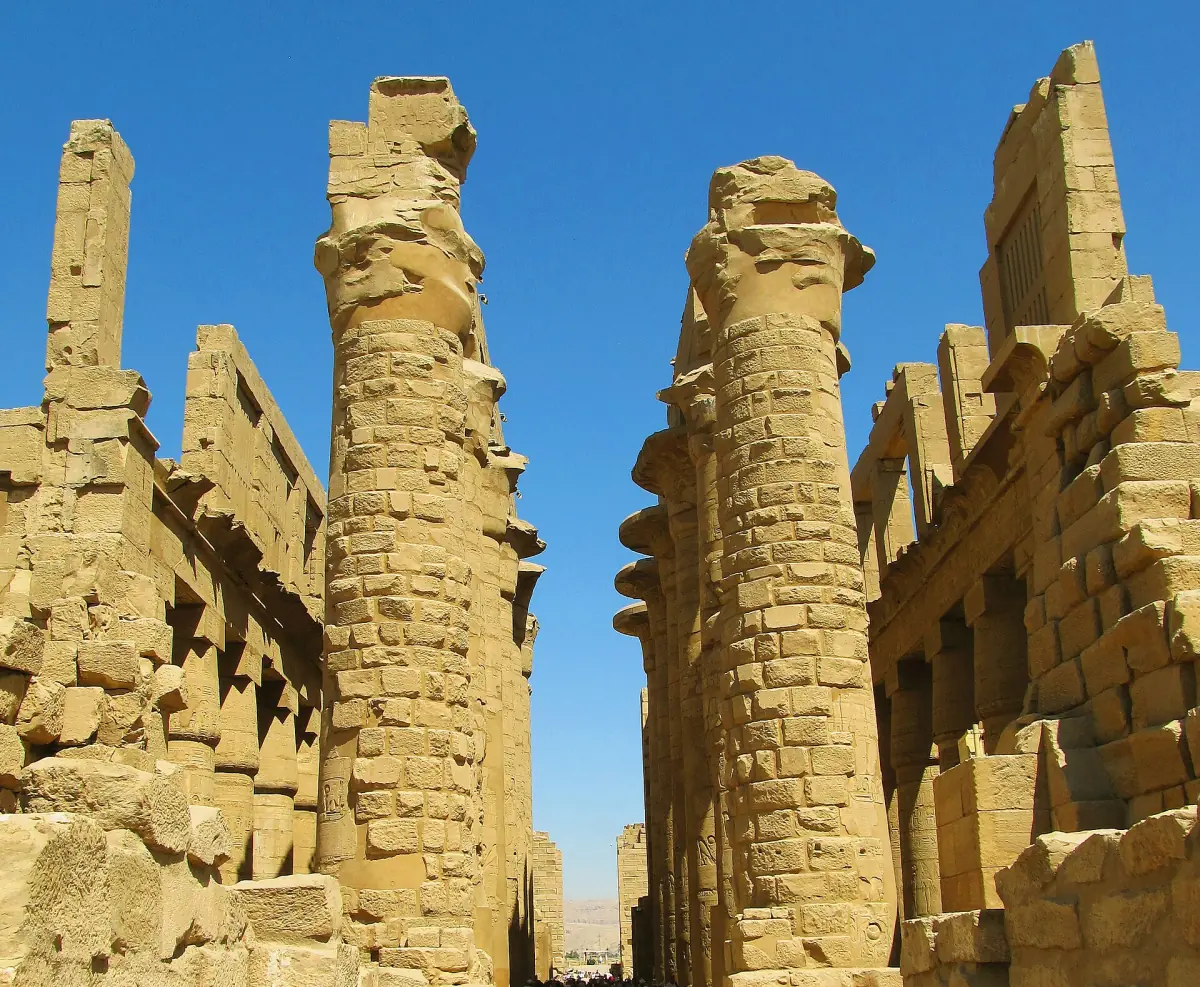
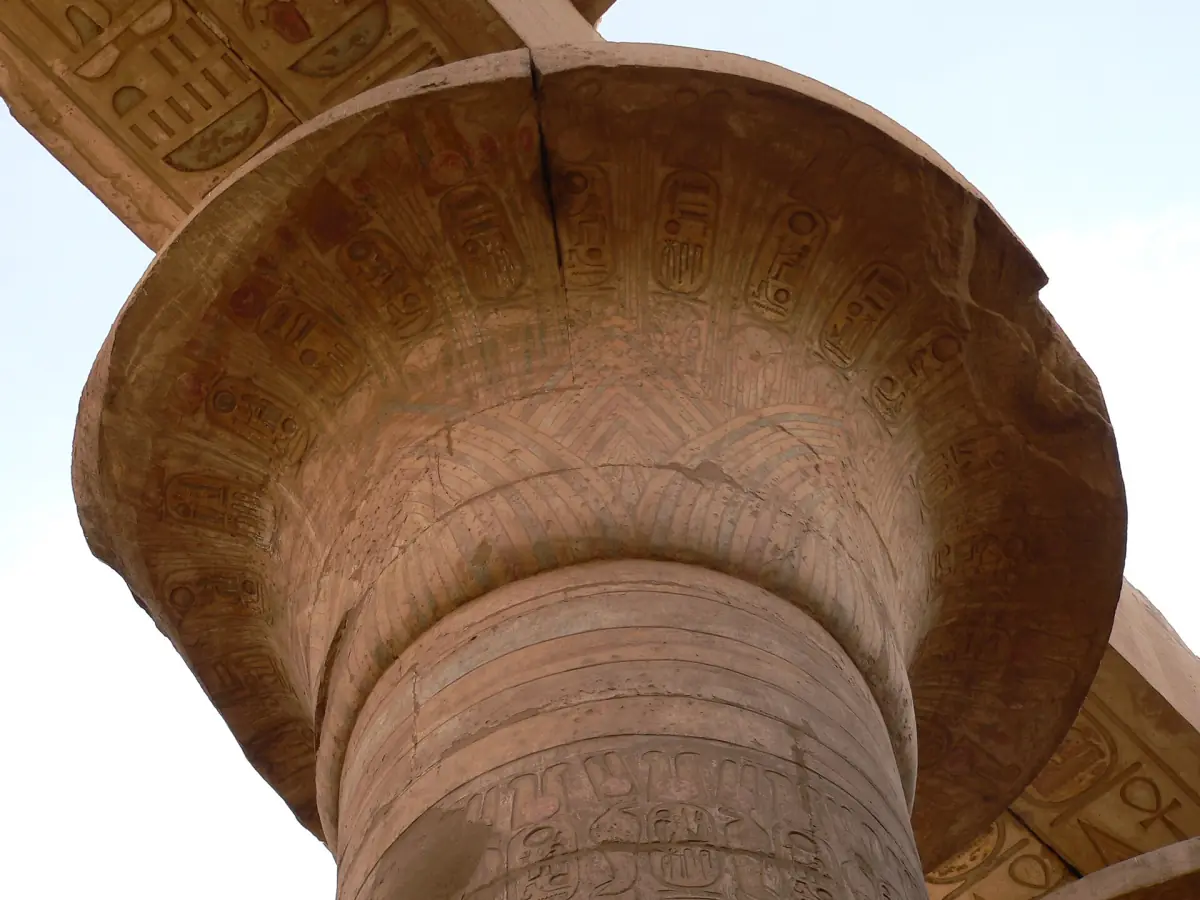
The hall stands between the second and third pylon. Its middle aisle is higher than the rest. The twelve central columns have open papyrus capitals, while the side columns have closed buds. Windows high in the central aisle let in light. The original stone roof has mostly been lost, so the hall feels more open today than it did in antiquity.
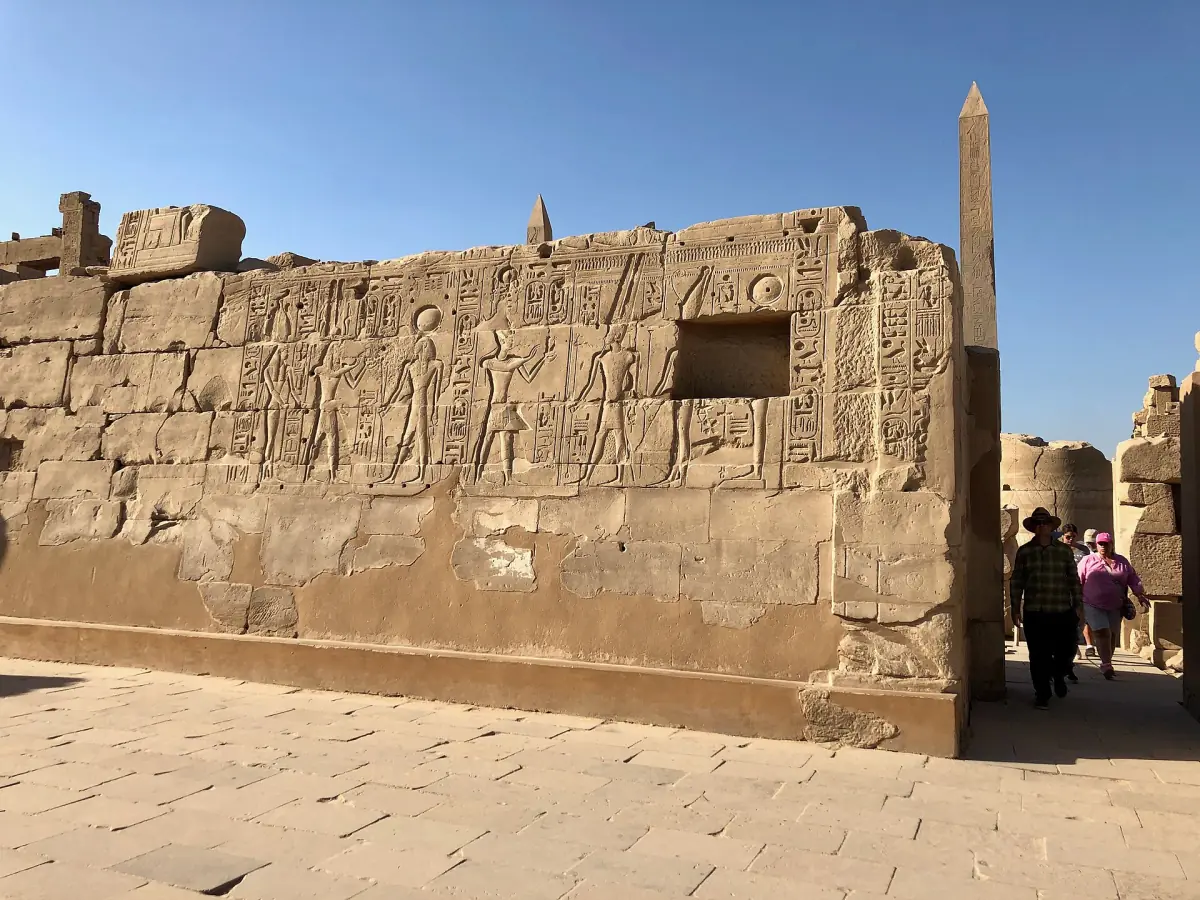
The sandstone columns were once painted. Seti I decorated the walls in raised relief, and Ramses II had parts changed to sunk relief. Not every figure is therefore the unchanged work of one king.
Obelisks, the Sacred Lake and the Open Air Museum
Two obelisks still stand in the Amun precinct. Hatshepsut's is the taller, at almost 30 m. The one of Thutmose I, behind the third pylon, is 21.7 m high. The Sacred Lake was the place where priests purified themselves before rituals. A restoration programme for a building of Taharqa north of the lake runs from 2024 to 2027. That is a project period, not a closure of the lake or of Karnak.
The Open Air Museum holds the White Chapel of Senusret I and the Red Chapel of Hatshepsut. A calcite chapel of Thutmose III was rebuilt between 2010 and 2016 and topped with a 76 t roof slab. Foreign visitors do not pay extra for the museum.
Karnak Temple facts: frequently asked questions
How many columns are in the Great Hypostyle Hall?
There are 134 columns: 12 tall central columns and 122 smaller side columns.
How big is the Great Hypostyle Hall?
It measures about 102 m by 53 m, which is rounded to about 5,000 m². Multiplying the two sides gives about 5,400 m².
How tall are the obelisks?
Hatshepsut's standing obelisk is almost 30 m high and weighs over 300 t. The obelisk of Thutmose I is 21.7 m high and about 143 t.
Who built Karnak Temple?
Many kings did. The earliest traces date to Intef II, and Senusret I, Hatshepsut, Thutmose III, Seti I and Ramses II all left major works. Building went on into Ptolemaic and Roman times.
How many pylons does Karnak have?
The Amun precinct has ten, numbered I to X: six on the east-west axis and four on the cross axis running south. This is the usual count for that precinct, not for every gateway on the site.
Is Karnak the same as Luxor Temple?
No. They are two different sites on the East Bank, about 3 km apart, with separate tickets.